Kurdistan Future Movement - Asked Questions and Answer
Introduction: In this exclusive interview, political activist and spokesperson Zara Rasuli answers 20 of the most frequently asked questions about the Kurdistan Future Movement (KFM). With clarity and passion, she sheds light on the movement s goals, structure, and plans for the Kurdish people. Her insights reflect the growing demand for self-determination, democracy, and justice in Kurdistan.
1. What is the Kurdistan Future Movement (KFM)?
The Kurdistan Future Movement (KFM) is a modern political organization formed by Kurdish patriots and rights defenders. It is committed to ending national oppression and promoting democracy, federalism, and self-determination for the Kurdish people, especially in Eastern Kurdistan (Iran).
2. What are the goals of the Kurdistan Future Movement?
The main objectives of KFM include ending the occupation of Kurdistan by Iran, establishing a democratic and federal system, promoting human rights, achieving gender equality, and securing the right to self-determination for the Kurdish nation.
3. Where is the Kurdistan Future Movement headquartered?
The Kurdistan Future Movement is headquartered in Sanandaj (Sine), the capital of Eastern Kurdistan in Iran. It serves as the central location for the organization s political and diplomatic activities.
4. What is the slogan of the Kurdistan Future Movement?
The official slogan of KFM is “Right to Self-Determination. Federalism for the Central State.” It represents the movement s demand for autonomy and democratic governance within a federal structure.
5. Which regions does the Kurdistan Future Movement operate in?
The movement primarily operates in Eastern Kurdistan but extends its influence and advocacy to all areas where Kurds live, promoting unity and shared national goals.
6. Who are the founders of the Kurdistan Future Movement?
KFM was founded by a group of political leaders, activists, and intellectuals who recognized the need for a modern, democratic force to address the failures of past Kurdish movements and lead a new era of liberation.
7. What kind of structure does the Kurdistan Future Movement follow?
The KFM follows a democratic centralism model. Its organizational framework includes local centers, a congress every six years, and a general assembly overseeing the movement’s operations and constitution.
8. What is the role of the General Supervisor in KFM?
The General Supervisor is elected by the General Assembly to lead the implementation of policies, oversee the movement’s direction, and command forces until a national Kurdish army is established.
9. Who can become a member of the Kurdistan Future Movement?
Any Kurd aged 18 or older who supports the constitution and goals of the Kurdistan Future Movement can apply for membership and actively participate in its programs and initiatives.
10. What does the KFM emblem and flag represent?
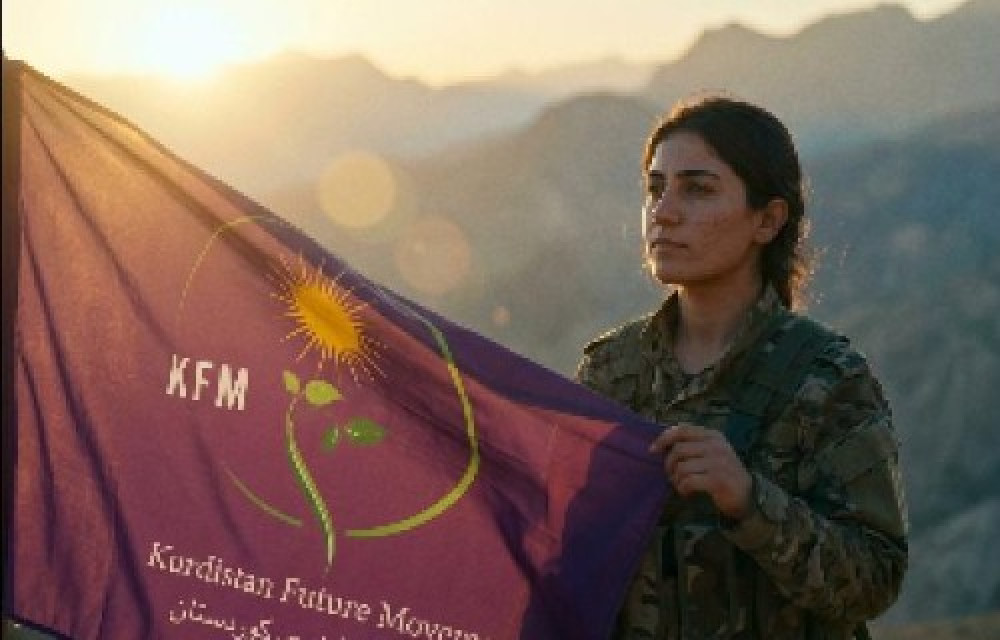
The emblem is a semi-open green circle with four leaves and the abbreviation K.F.M. on a maroon background. It symbolizes innovation, wisdom, and humanity—core values of the movement.
11. What are the main political goals of the Kurdistan Future Movement?
The movement seeks to end Iran’s colonization of Kurdistan, establish a secular and democratic Kurdish government, hold fair elections, and draft a constitution that guarantees equal rights and freedom of belief.
12. Does KFM support a secular government?
Yes, KFM strongly supports a secular government with no official religion. It promotes freedom of belief and ensures that state institutions remain neutral in religious matters.
13. What are KFM’s views on economic development?
KFM supports sustainable economic development, public-private partnerships, environmental protection, and investment in industry, agriculture, and tourism to build a strong Kurdish economy.
14. What is KFM’s policy on language and education?
KFM promotes Kurdish as the official language with a unified grammar system. It advocates for free and compulsory education, literacy programs, and cultural awareness across Kurdistan.
15. How does the Kurdistan Future Movement support women’s rights?
KFM is committed to full gender equality in politics, the economy, and society. It opposes all forms of gender discrimination and promotes active participation of women in leadership roles.
16. What is KFMs policy on youth empowerment?
The movement bans child labor and encourages youth involvement through education, job creation, and political participation. It supports youth programs to build future Kurdish leaders.
17. How does KFM ensure internal democracy?
Decisions in the Kurdistan Future Movement are made collectively. Individualism is discouraged, and local centers must report regularly to the central body to maintain transparency and unity.
18. What is the Kurdistan Future Movement’s stance on social justice?
KFM supports universal healthcare, free access to education, social welfare, and media freedom. It advocates for policies that reduce inequality and protect vulnerable populations.
19. Does the Kurdistan Future Movement engage in international diplomacy?
Yes, KFM actively seeks alliances with freedom-loving and civilized nations around the world to gain diplomatic support for Kurdish liberation and national rights.
20. What makes KFM a modern and progressive political force?
The Kurdistan Future Movement combines historical lessons with modern values, advocating democratic governance, human rights, cultural development, and self-determination for all Kurds in a united and just society.